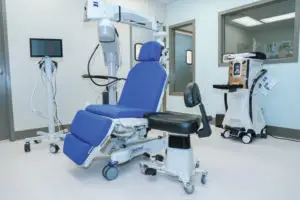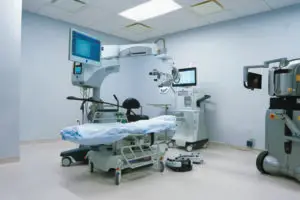
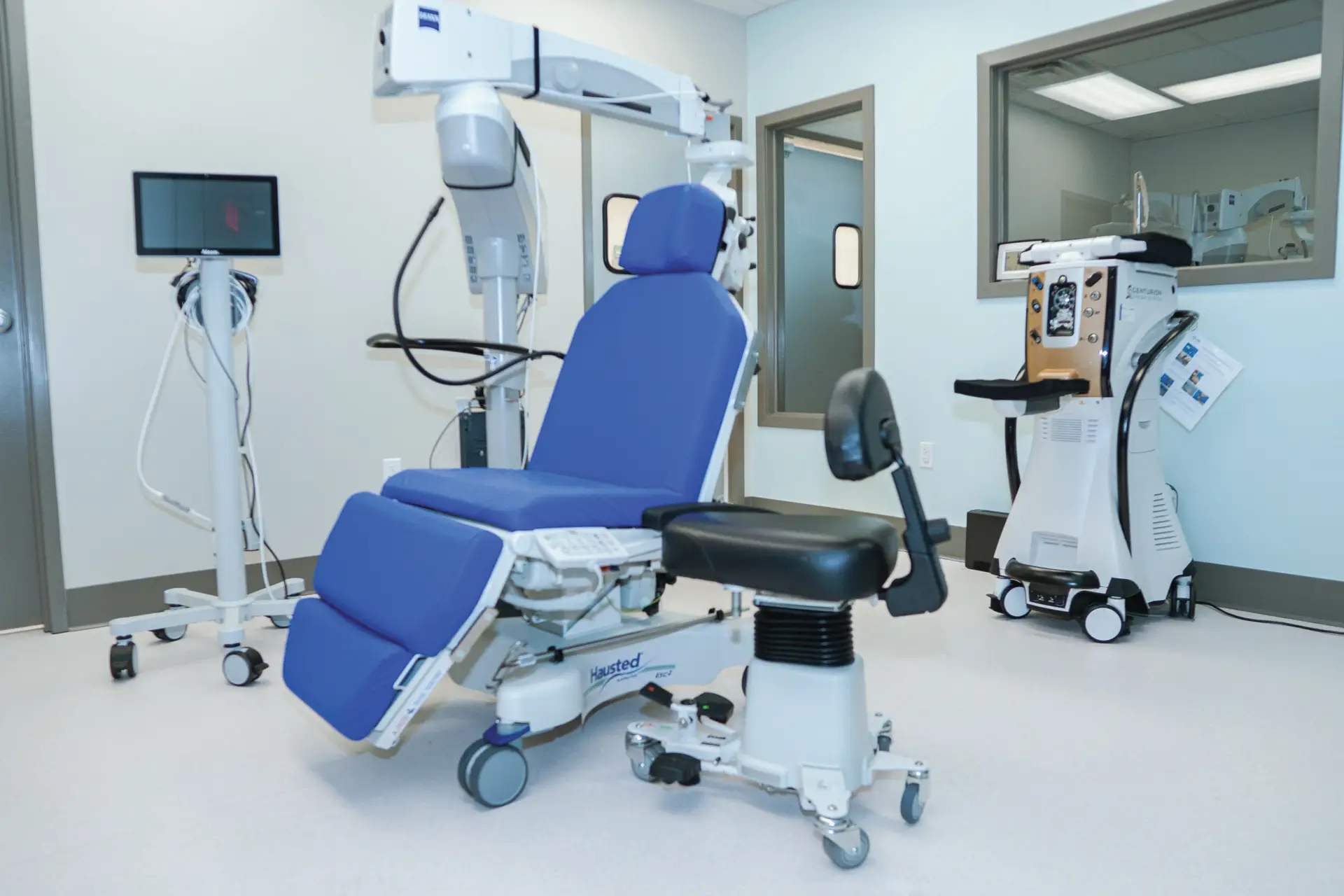
When I purchased a solo ophthalmology practice eight years ago, it already had an office-based surgery (OBS) suite. I was initially unfamiliar with OBS and didn’t fully embrace its potential right away. In particular, the idea of performing surgery without intravenous (IV) sedation was contrary to what I had been taught in residency and fellowship. However, once I had the chance to personally compare IV and oral sedation protocols and learned that oral sedation actually offered equivalent safety and control of pain and anxiety with less unwanted movement during surgery,1,2 I rapidly came to appreciate the benefitsof OBS.
My practice model is admittedly an unusual one. I have an entirely private-pay practice and don’t accept any insurance, including Medicare. Unlike most OBS surgeons, I perform 100% of my cases in the OBS suite, referring out to others in the community if the patient needs to be operated on in an ASC or hospital setting. I have rarely needed to do that and am able to manage surgical complications and treat a wide variety of patients, including frail, elderly patients and those with dense, brunescent cataracts, the need for zonular support, or systemic complications, in the OBS suite
Here are five reasons young surgeons should consider OBS:
1. It provides autonomy
The private practice landscape has changed a great deal from what it was even 20 years ago, when it was more viable for a young surgeon to become a partner or invest in an ASC. Many practices now have private-equity (PE) ownership, giving doctors less control over decisions about practice direction and equipment. The existing partners were compensated generously by PE for giving up their ownership stake, but new entrants to the practice don’t have that benefit. Even without PE, mergers and corporate or hospital acquisitions have resulted in large groups where a junior surgeon doesn’t have the opportunity to become a partner in the practice or even a partial owner of an ASC. Colleagues in my age cohort find that ASCs are limiting the number and types of cases they can perform, constraining their surgical volume.For entrepreneurial young surgeons who value autonomy, I believe that OBS is really the most viable option today.
2. Scheduling is flexible
Because the OBS is on site, we can have patients undergo surgery according to our own schedule, without being restricted to specific time blocks at an offsite ASC. Clinic runs congruently with surgery; optometrists handle most of the clinic appointments, and I can mostly stay in the OBS suite performing surgery, which is what I enjoy most. We don’t have a set day for different types of procedures, so it is not at all unusual for me to have cataract procedures, LASIK, cross-linking, pterygium repair and Nd:YAG procedures all mixed together throughout the day. I can schedule same-day surgery for patients who come from far away and, as a non-insurance-based provider, I’m able to treat both eyes on the same day. We are open on Saturdays, which have become my busiest days for surgery and consults because patients really love not having to miss work for a weekday appointment.
3. Staffing is optimized
Because our surgical days are so variable, all staff members are cross-trained to assist with all types of procedures. This helps tremendously with flow and resources. We don’t have laser technicians idle when there are no laser procedures, for example, and we can adapt when employees call in sick. It enables me to offer good employees full-time work and promotion opportunities, which has increased their job satisfaction and decreased turnover. Another advantage of performing OBS is that I am always operating with my own well-trained team. They know exactly what tools I need, so the environment is very predictable.
4. I can offer competitive pricing
Without an ownership stake, the involvement of an ASC eats into your fees and restricts the surgeon’s ability to charge patients competitively. For example, I know other young surgeons who say they can’timplant phakic IOLs because the fees charged by the ASC for that type of surgery are so high, putting the procedure financially out of reach for most patients. Because my volume is not constrained and I have minimized costs related to anesthesia, I’m able to price more competitively and as a consequence, implant a lot of phakic IOLs.
5. I can provide the highest level of service to patients
I’m located in a very competitive environment, in the Los Angeles area, and we offer premium, elective procedures. In order to set our practice apart, it is important to deliver outstanding service and a premiumpatient experience. The OBS environment is part of that package and so is being able to treat patients on the same day or on the weekend. Because oral sedation doesn’t require any needles or preoperative fasting, patients have less anxiety and an easy recovery. For older patients, anesthesia itself is a significant risk of surgery, so I often just talk those patients through surgery with only “verbal anesthesia” and find that they are very comfortable with this approach.
In my experience, the OBS environment provides a very comfortable and patient-friendly experience, while increasing surgeons’ opportunity to offer premium surgical options and maintain autonomy and control over pricing, scheduling, and staff. It’s a great way for a young surgeon to launch their careers in ophthalmology.
References:
- Chen M, Hill GM, Patrianakos TD, Ku ES, Chen ML. Oral diazepam versus intravenous midazolam for conscious sedation during cataract surgery performed using topical anesthesia. J Cataract Refract Surg. 2015;41(2):415-421.
- Koolwijk J, Fick M, Selles C, et al. Outpatient cataract surgery: incident and procedural risk analysis do not support current clinical ophthalmology guidelines. Ophthalmology. 2015;122(2):281-287.