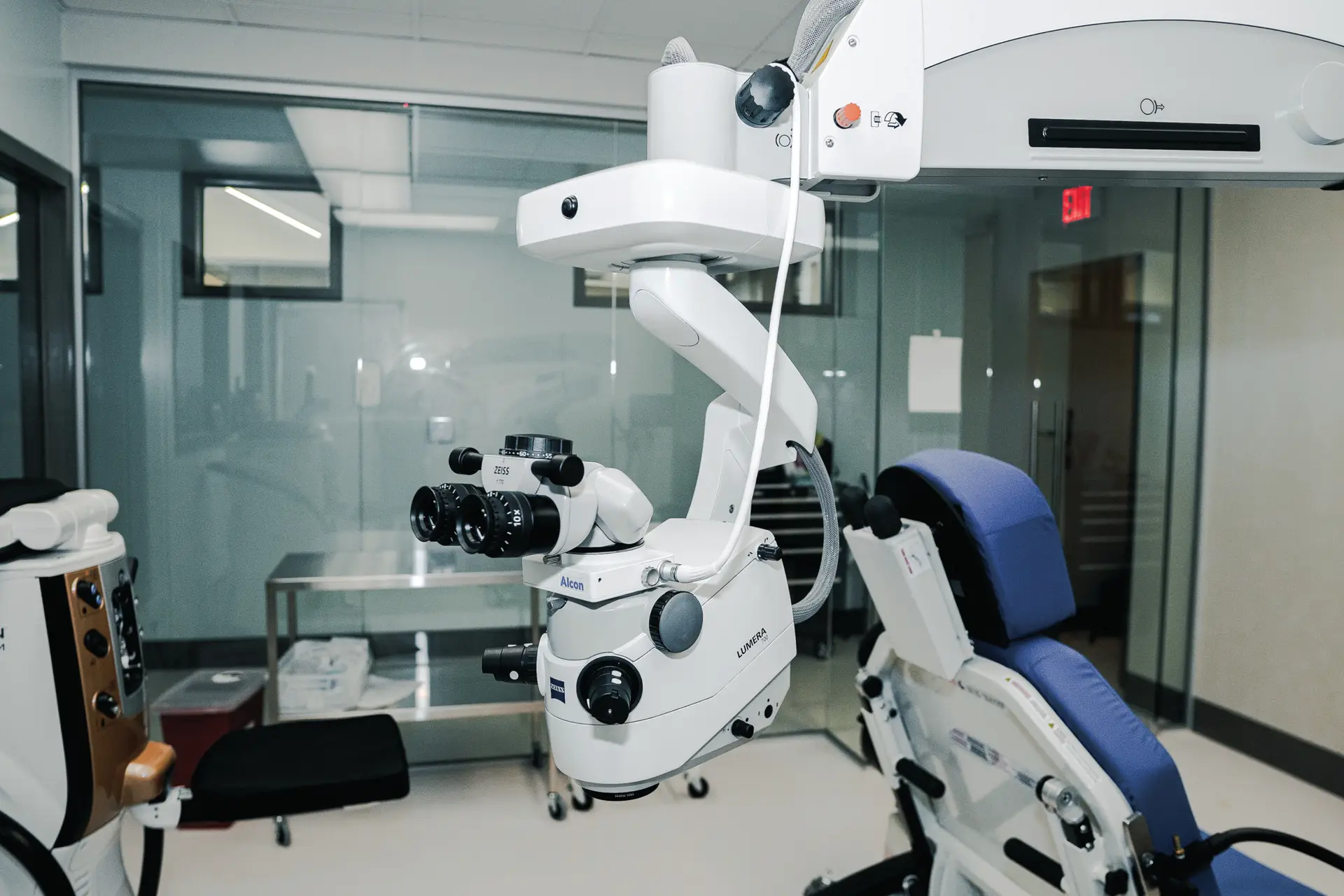
When I began my career, cataract surgery was a 30-minute procedure performed largely in hospitals or hospital outpatient departments (HOPDs). The idea of a community ambulatory surgery center (ASC) was considered highly progressive at the time. But eventually, due to a confluence of factors—including surgical efficiency, cost-cutting pressures, and increased demand—cataract surgery in an ASC became the norm rather than the exception. Surgeons quickly appreciated the opportunity to shift cataract surgery into a setting that was more specialized to ophthalmology and provided a better patient experience, while still maintaining high safety standards.
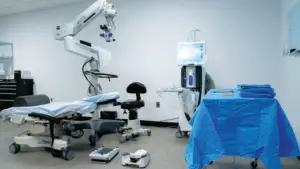
Similarly, we are now in the early stages of what I believe will be an ongoing transition away from ASCs and towards office-based surgery (OBS) in specialized suites that are outfitted much like an OR.
Office-based surgery is made possible in part by the safety and efficiency of modern cataract surgery. Every aspect of the procedure, from smaller incisions to lower infusion pressures to femtosecond laser softening of the nucleus to reduce the need for ultrasound energy, has made cataract surgery gentler on ocular tissues. With shorter, safer procedures, some cataract surgeons have been performing most of their cases with oral and topical sedation only, eliminating the need for intravenous anesthesia and the on-site presence of an anesthesiologist or certified nurse anesthetist.
As the demand for cataract surgery rises with an aging population, the number of providers is decreasing, creating a critical imbalance of supply and demand. This problem is compounded by declining surgical time, as surgery centers and anesthesiologists prioritize more lucrative procedures. As a result, ophthalmologists in many areas are facing restricted surgical time, patient backlogs, limited growth potential, and lack of control and flexibility. In some markets, where certificate-of-need requirements prevent surgeons from opening new ASCs and there are steep barriers to gaining an ownership stake in an existing ASC, young surgeons are turning to OBS as the only way to reliably have more control over scheduling, staff and equipment.
For example, one surgeon who had been limited by his local ASC to two surgical days per month and 12 cases per day was able to shift to eight days per month in his OBS suite, with up to twice as many procedures per day, significantly increasing his surgical capacity.
iOR Partners has led the OBS movement, with more than 170 of its turnkey OBS suites now open or in development. According to the 2025 ASCRS Clinical Survey, 6% of surgeons now perform surgery in an OBS suite, a 50% increase from 2024.
“I didn’t initially plan on operating solely out of my in-office surgery center,” said Sioux Falls, SD, surgeon Alison Tendler, MD, an early adopter of OBS. “But I quickly realized it was the best choice—not just for me, but for my team and my patients. Patients do not feel like they are in a medical facility having a major medical intervention. They’ve been in these rooms before, they know the staff, and they feel cared for every step of the way. That comfort makes all the difference, especially during surgery.” At most OBS centers, patients don’t need to avoid eating and drinking for 12 hours before surgery, and they can drive themselves home afterwards, so surgery is less of an interruption in their life.
What about safety?
Early OBS practices have generated a significant amount of data showing that safety is not compromised by moving cataract surgery into an office setting. In 2016, researchers at Kaiser Permanente Colorado reported excellent outcomes in their series of more than 21,000 eyes treated in the office.1 In 2023, Kugler et al found that, out of 18,000 cases of office-based lens surgery performed at 36 different clinical sites, the rate of serious complications, including endophthalmitis (0.028%), unplanned anterior vitrectomy (0.177%), and return to OR (0.067%) was similar to or lower than that reported in the literature for modern cataract surgery.2 A majority of the patients in that study were ≥65 years old (54%) and had systemic comorbidities (62%). Data gathered late last year by iOR Partners from 87 clinical centers and nearly 110,000 cases demonstrates that the safety profile of OBS continues to be excellent (Table 1) even as the volume and types of procedures performed in an OBS setting have increased.
While lens procedures (cataract surgery, phakic IOL, and refractive lens exchange) make up the largest proportion of OBS procedures, some surgeons are performing oculoplastics cases, retina surgery, and other procedures in their OBS facilities. Omar Shakir, MD, MBA, customized an OBS suite for his retina-specific needs. “For me, it’s really about streamlining processes while maintaining the highest standards of care,” he said. “I find that I am even more comfortable with the safety of my OBS suite than I am in the ASC or hospital setting because I can completely control the sterilization processes and be very detailed about every aspect of the room environment.”
My own evolution
I currently still operate in an ASC. We are fortunate to have a well-functioning, long-standing ophthalmic ASC that is owned by us. It is a comfortable setting for patients and it works very effectively for us, so there isn’t a strong need to move to OBS in order to have control over staff or scheduling. However, when we built a new flagship office for the practice, we very deliberately planned for it to accommodate an OBS suite in the future.
An alternate OBS payment model from Medicare is likely on the horizon and would make OBS considerably more attractive to doctors whose practice is largely Medicare-covered cataract surgery. I anticipatethat Medicare will recognize that the OBS environment can offer cost savings and will actually incentivize surgeons to move to that setting, much as the program incentivized the move from hospitals to ASCs years ago.
To keep pace with the eye care needs of the future, we need efficient ways to perform surgery on more people. Robotic surgery, artificial intelligence models and streamlined OBS are all likely to play a role in that solution. As payment models adapt and economic and demographic pressures continue to build, I predict that we will see continuous growth in office-based surgery.
References:
- Ianchulev T, Litoff D, Ellinger D, et al. Office-based cataract surgery: Population health outcomes study of more than 21 000 cases in the United States. Ophthalmology 2016;123(4):723-8.
- Kugler LJ, Kapeles MJ, Durrie DS. Safety of office-based lens surgery: U.S. multicenter study. J Cataract Refract Surg 2023;49:907-911.