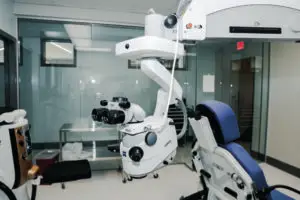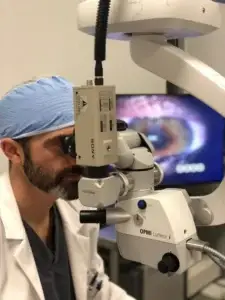
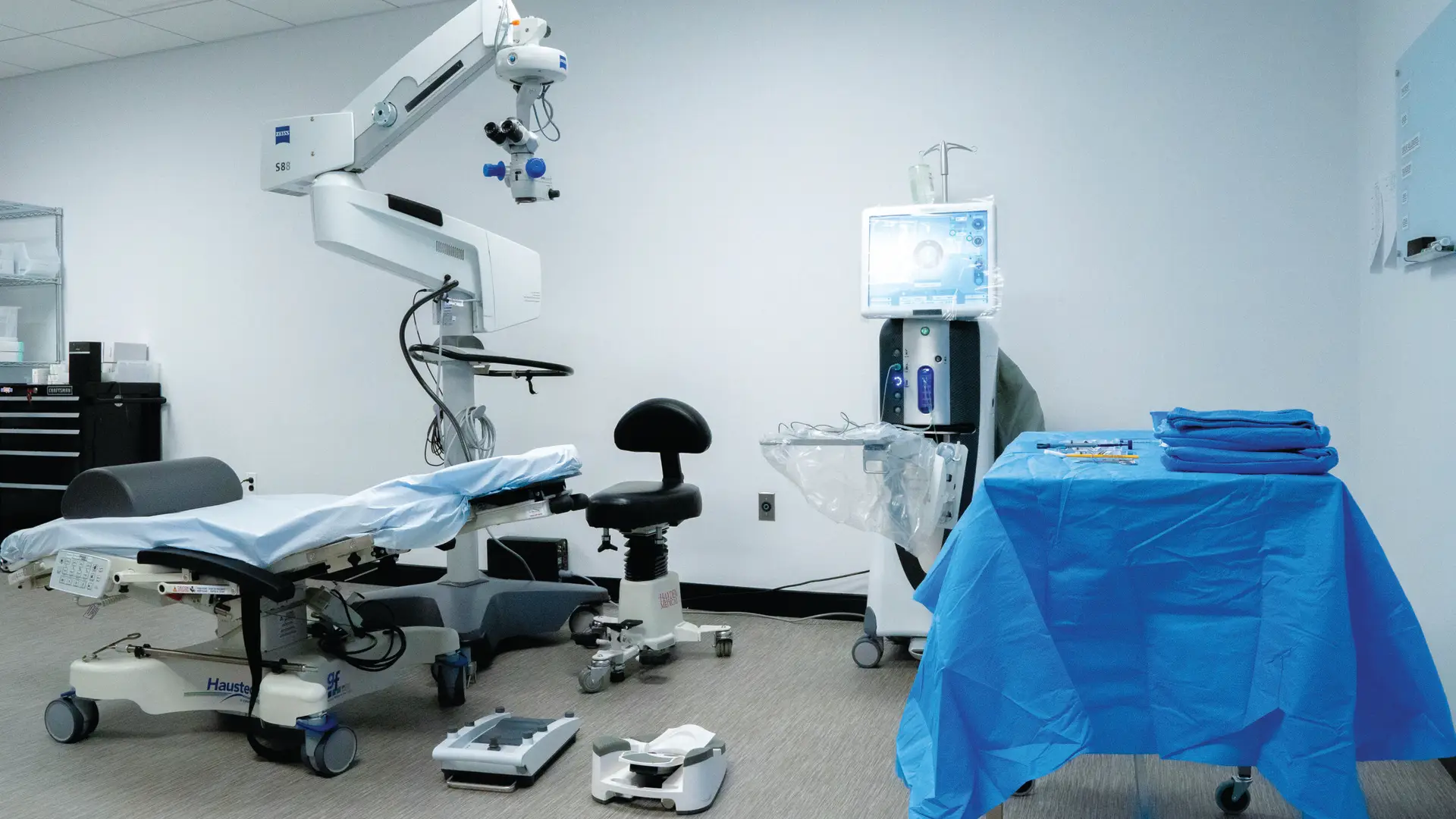
Office-based surgery (OBS) is rapidly reshaping the future of retina care. Once considered unconventional for posterior segment procedures, office-based retina surgery is now emerging as a safe, efficient, and patient-centered alternative to hospital and ambulatory surgery center (ASC) environments. Driven by access-to-care challenges, anesthesia shortages, declining reimbursements, and a growing emphasis on patient experience, OBS represents a fundamental shift in how retina surgeons deliver care.
Across the country, retina specialists are demonstrating that high-acuity procedures—including vitrectomies, retinal detachment repairs, and endophthalmitis management—can be performed safely and effectively in the office setting. Their experiences echo a broader movement toward decentralization of surgical care and a re-empowerment of physicians as leaders of their clinical environments.
Addressing the Access-to-Care Crisis in Retina
One of the strongest arguments for office-based retina surgery is improved access to care. In many regions, particularly underserved or rural areas, retina surgeons face limited block time at hospitals or ASCs, prolonged scheduling delays, and competition with higher-revenue specialties such as orthopedics. These constraints can be particularly detrimental in retina, where time-sensitive conditions like retinal detachment and endophthalmitis demand rapid intervention.
Surgeons operating within an OBS model consistently report dramatic reductions in time from diagnosis to treatment. Rather than waiting days—or even weeks—for OR availability, patients can often undergo surgery within hours of diagnosis. This immediacy not only improves clinical outcomes but also aligns with what patients expect when facing vision-threatening disease.
OBS also provides operational resilience. Weather events, staffing disruptions, or anesthesia shortages that might paralyze hospital-based surgery schedules can often be managed with minimal interruption in an office setting. Surgeons retain the flexibility to reschedule quickly, maintain continuity of care, and avoid massive downstream backlogs that negatively affect patients and practices alike.
A Paradigm Shift in Anesthesia and Recovery
A defining feature of office-based retina surgery is the move away from IV anesthesia toward oral or minimal sedation protocols. I perform the majority—if not all—of my cases using oral anxiolytics, sub-Tenon’s or subconjunctival blocks, and non-pharmacologic anxiety-reduction strategies.
This approach offers several advantages:
- Reduced anesthesia risk: Eliminating IV sedation minimizes respiratory and cardiovascular complications, which are often the source of perioperative adverse events.
- Improved patient experience: Patients remain awake, oriented, and comfortable, frequently reporting less nausea, faster recovery, and greater satisfaction.
- Operational simplicity: OBS reduces dependence on anesthesiologists and CRNAs, a critical advantage amid nationwide anesthesia staffing shortages.
Patients are not required to fast, can remain in their own clothing, and ambulate independently before and after surgery. The familiarity of the office environment—staff they recognize, location they know, and routines they trust—plays a significant role in anxiety reduction and overall comfort.
I describe OBS recovery as a “rapid recovery protocol,” with patients walking out of the procedure room and resuming daily activities far sooner than after hospital-based surgery.
Efficiency Without Compromise
Contrary to longstanding assumptions, OBS does not sacrifice efficiency or surgical throughput. In fact, many retina surgeons report significant gains. Without ASC turnover delays, anesthesia bottlenecks, or rigid block schedules, OBS enables streamlined workflows and remarkable productivity. High-volume surgeons have reported performing dozens of vitreoretinal procedures in a single day while maintaining safety and quality standards.
Because the OBS is embedded within the clinic, surgeons can continue to see patients while procedure rooms are turned over. Injections, lasers, and evaluations can occur concurrently, maximizing both physician and staff productivity.
Empowering Staff and Strengthening Practice Culture
Office-based retina surgery transforms not only the patient experience but also staff engagement and retention. Clinical team members gain exposure to advanced surgical care, acquire new skills, and develop a deeper understanding of retinal disease and treatment.
This elevated role fosters pride, ownership, and professional growth. Cross-trained staff who participate directly in surgery become more effective educators for patients, reinforcing pre- and post-operative counseling throughout the care continuum. Practices consistently report higher morale, improved retention, and a stronger sense of shared mission when surgery is brought in-house.
Technology Adoption and Innovation
OBS gives retina surgeons unparalleled autonomy over technology adoption. Unlike hospitals or ASCs—where capital purchases are subject to committee approval—office-based surgeons can rapidly integrate cutting-edge tools such as 3D heads-up visualization systems, intraoperative OCT, and next-generation vitrectomy platforms.
This freedom accelerates innovation, enhances surgical precision, and supports differentiation in increasingly competitive markets. For patients, the presence of advanced technology reinforces confidence and perceived value; for surgeons, it ensures their environment evolves alongside their skills and clinical ambitions.
Financial Sustainability and Value-Based Care
While OBS does not generate traditional facility fees, it enables alternative revenue models that may be more sustainable in the long term. By operating outside of hospital and ASC constraints, surgeons gain flexibility in structuring non-covered services, premium experiences, and cash-based offerings.
Equally important, OBS allows for greater cost control. Lower overhead and predictable case costs empower surgeons to reinvest in technology, staff, and community service initiatives. Some practices have leveraged this efficiency to expand charity care and provide sight-saving surgery to uninsured or underinsured patients—care that would be prohibitively expensive in hospital settings.
A Natural Evolution of Retina Care
Office-based surgery is not an outlier in medicine. ENT, oral and maxillofacial surgery, dermatology, and plastic surgery have long embraced in-office procedural care. Retina surgery is now following a similar trajectory—driven by necessity, enabled by technology, and validated by outcomes.
As healthcare systems face mounting strain, OBS offers a scalable solution that preserves quality while reducing dependence on high-acuity facilities. For retina surgeons, it represents a return to clinical autonomy and a powerful tool for meeting the growing demand for vitreoretinal care.
Conclusion
Office-based retina surgery is redefining what is possible in vitreoretinal care. By improving access, enhancing patient experience, reducing anesthesia dependence, and restoring surgeon control, OBS aligns clinical excellence with operational efficiency. As more retina specialists adopt this model, it is becoming increasingly clear that OBS is not merely an alternative—it is a forward-looking standard for the next era of retina surgery.