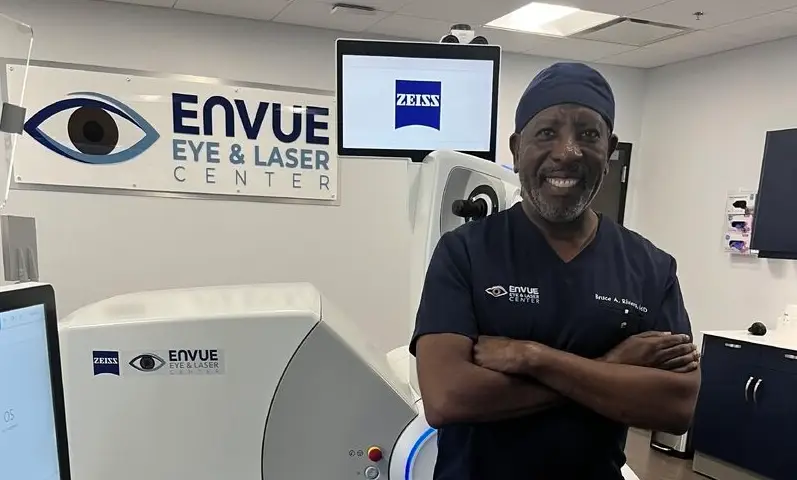
A conversation with Bruce Rivers, MD, Envue Eye & Laser Center, Oxon Hill, Md.
Q: Dr. Rivers, how were you first introduced to small incision lenticule extraction (SMILE)?
In 2010, a surgeon from Singapore spoke about SMILE® at a conference I attended while a resident at Madigan Army Medical Center at Fort Lewis, Wash. The military tends to do a lot of PRK, and a refractive surgery that would allow faster healing as with LASIK but without a flap sounded appealing, but it wasn’t approved in the United States at the time.
Fast forward to 2015 when a ZEISS representative came in to discuss their equipment at the Warfighter Refractive Eye Surgery Program and Research Center. I asked about SMILE and if there was any way we could be involved in a study. The company obliged, and we went on to perform several SMILE studies, achieving excellent results across the board.
Q: You performed more than 1,000 SMILE surgeries while on active duty with the U.S. Army. Why did you decide to continue offering SMILE to your patients in private practice?
Plain and simple: I believe SMILE is the future of refractive surgery, and, eventually, every refractive surgeon will be performing SMILE. Having performed laser vision correction with small incision lenticule extraction for many years, I feel very comfortable offering SMILE as one of my premier procedures. And to my knowledge, no one else in the Washington, D.C., area is offering SMILE.
Q: Can you explain your adoption of the ZEISS Corneal Refractive Workflow and how you have personalized the workflow experience within your practice?
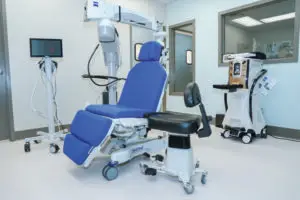
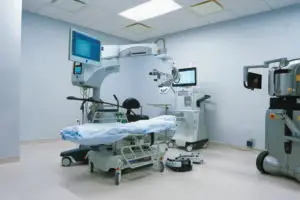
Starting a new practice is a costly venture, and one of the largest expenses is staff. With a limited startup budget, I couldn’t afford to hire a large staff, but I was fortunate to have people who had worked for me in the military join me in private practice. To optimize the efficiency of my small but experienced staff, I invested in smart technology.
All of my equipment talks to each other and is 100% digital. My staff performs the required tests and sends the images and diagnostic information directly to my desktop using the FORUM® treatment planning software. I can view CIRRUS® OCT images and CLARUS® fundus photographs, and I can perform a refraction using the VISUREF® autorefractor. Because all of the data I need is at my fingertips, we can work smarter while being eco-friendly. Furthermore, our EMR is integrated with FORUM to allow real-time image integration for visibility on iPads or other devices.
Q: In your opinion, what are the most essential ZEISS diagnostic devices within your Corneal Refractive Workflow and why?
There are two—the i.Profilerplus and the VISUREF autorefractor. The i.Profilerplus—a combination wavefront aberrometer, autorefractometer, corneal topographer, and keratometer—gathers all of the data from a patient’s prescription and sends it to the VISUREF, enabling me to fine-tune the refraction quickly. I perform all refractions myself, and these two devices streamline that process.
Q: How has ZEISS enabled you to better educate your patients about SMILE during your workflow process?
One of the most effective educational tools I use is the ZRefractive app, which was designed exclusively for ZEISS refractive customers. Every one of my patients who is contemplating refractive surgery views a 2-minute interactive video that shows the differences between PRK, LASIK, and SMILE. It perfectly explains what’s being done during each surgery, and it puts things into perspective when I talk to patients.
There’s a place for all three of these surgeries. I reassure patients they’ll have great results regardless of which surgery they have, because we’ll choose the surgery that’s best for each individual patient. Not all refractive centers have the technology to offer all options, and coming out of the military, where you may not get a chance to make a choice given the technology available, I like the fact that I have more options to make the best recommendation to my patients.
Q: What would you share with your surgeon colleagues who have not yet adopted SMILE as a part of their refractive practice?
As consumers become more aware of SMILE as a refractive surgery option, the interest and demand for SMILE will increase. It makes sense to incorporate SMILE into your practice now before the demand increases. I’m excited to bring SMILE to the Washington, D.C., area.
CAP-en-US_34_025_0049I © Carl Zeiss Meditec, Inc., 2022. All rights reserved.